What SOG was
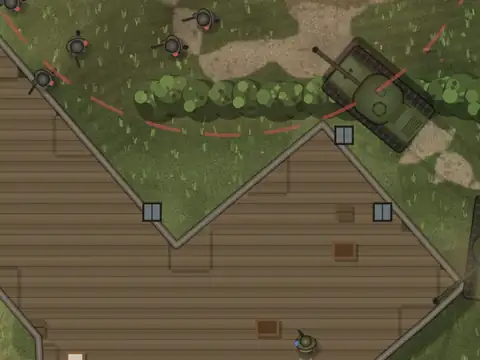
MACV-SOG, the Studies and Observations Group, sent small reconnaissance teams of American Special Forces soldiers and local troops across the border into Laos to watch the North Vietnamese supply routes. They went in by helicopter, moved quietly for days, and dreaded being found. When a team was found, everything depended on the helicopters: the slicks that could lift it out, and the gunships that could keep the enemy off it long enough.
Larger SOG units, the Hatchet Force platoons and companies of Americans and Montagnards, went in for bigger jobs: to search for a missing man, or to draw the enemy away from an operation somewhere else.
The eight missions
1. Break Contact and Run
Laos, 19 February 1968. A nine-man recon team on patrol east of Attopeu is found by a much larger North Vietnamese force. Stay hidden as long as you can, then break contact with claymores and Huey gunships and get everyone to the landing zone. Free to play.
2. The Last Sling
Laos, 13 June 1968. A recon team of South Vietnamese irregulars led by an American adviser is surrounded by a force the size of a battalion. Find the thin part of the ring and break out. The jungle is too thick to land, so the slicks hover and lift four men a time on ropes.
3. Lights On
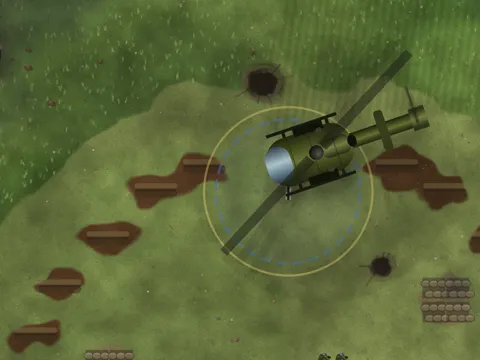
Near Ap Go Cong, night of 18 June 1968. A four-man long-range patrol of the 1st Infantry Division, regular Army rather than SOG, is surrounded at night between the rice paddies. Two AH-1G Cobras of Troop D, 1st Squadron, 4th Cavalry, are all the help there is. When they run dry, the lead Cobra comes down and the four men ride out on its skids and rocket pods.
4. Bright Light
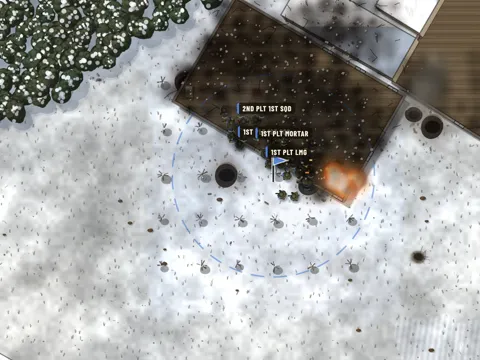
The tri-border, 30 December 1968. A Hatchet Force platoon goes in to find an American missing from a recon team, where Laos, Cambodia and South Vietnam meet. It is ambushed by an enemy force estimated at two companies. Drag the wounded in, hold the perimeter for hours, and bring every man out.
5. Six Men Alone
Laos, monsoon 1970. Recon Team Montana is put in at the wrong place, scattered in three pairs, with damaged radios, under rain and low cloud. Pink Panther Cobras of the 361st and the "Bikini" slicks of the 170th Assault Helicopter Company search for them. Fire a pen flare in a break in the cloud, and the enemy sees it too. All six came out.
6. Tailwind
Laos, near Chavane, 11-14 September 1970. A whole Hatchet Force company is flown deep into Laos by Marine CH-53s, under Marine Cobras. Keep moving, find the enemy headquarters, search it for documents, then silence the heavy machine guns at the pickup zone. The full story of Operation Tailwind.
7. Prairie Fire, Twice
Laos, 29 January 1971. Two recon teams, RT Hawaii and RT Colorado, about fifteen kilometres apart on either side of Highway 110, both call "Prairie Fire", the code for a team about to be overrun, on the same day. One pair of Cobras, and moving it between the teams costs time. Choose which team gets the slicks first.
8. Hickory
Hill 950, near Khe Sanh, 4-5 June 1971. A radio relay site on a bare hilltop, held by a few American Special Forces men and a platoon of Bru. Every man you send to the helicopter pad is one fewer on the wire. Then the fog comes, and the rest must get off the hill on foot.
How it plays
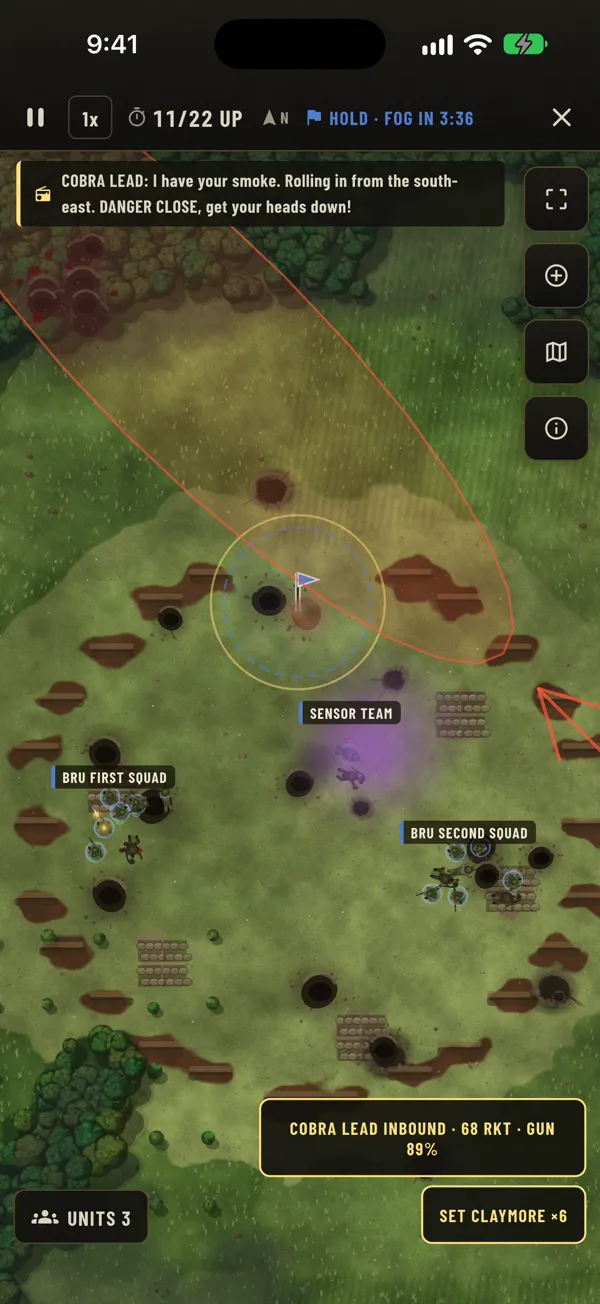
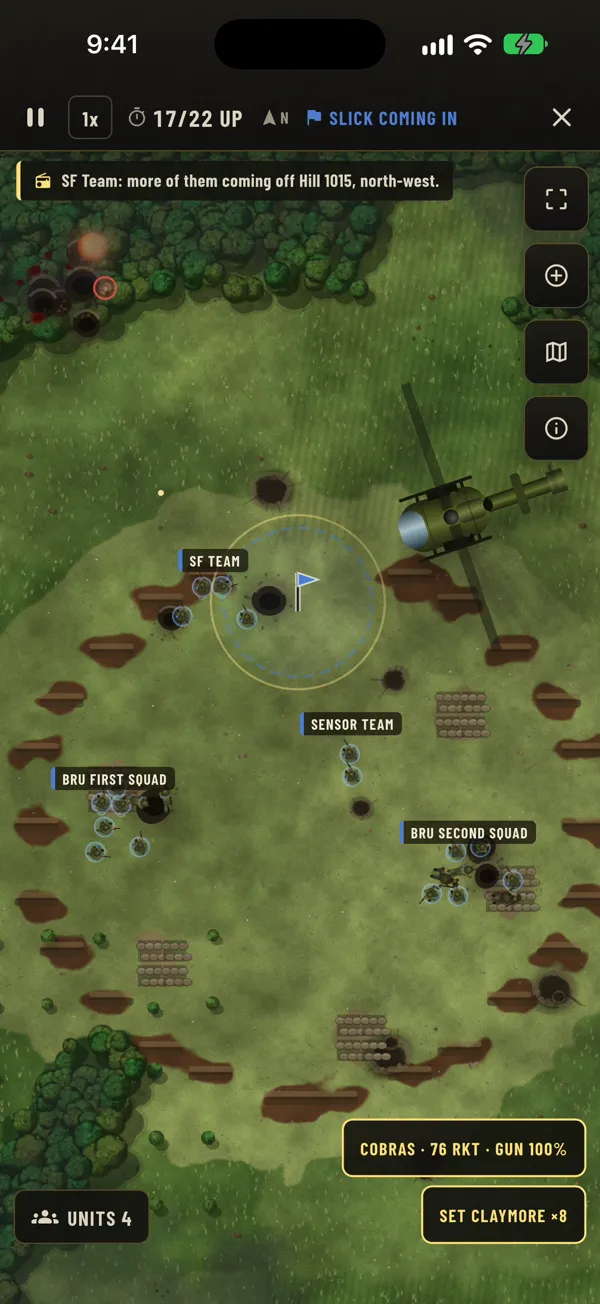
Gunship runs. Tap the gunship button, tap the target, then tap the side to come in from. The run flies along that line with rockets and guns, and anyone under it is hit, your own men too, so runs near your men must be confirmed: danger close. Your team pops smoke or flashes a strobe so the pilots know where you are.
Claymores. Set one, aim it, and fire it while a man of that team is within reach of the wire. Out of reach, a time fuse gives it ten seconds instead: leave it on your back trail.
Getting out. Slicks land on the landing zone, or hover over the trees and drop ropes. They will not come to a hot landing zone, so the last fight is always to keep the enemy off it.
The aircraft of the record. Huey gunships in the 1968 missions, Cobras from 1970, with the one exception of the night Cobra of mission 3, as it happened. The game names a unit only where a source names it.
The history
Every mission is based on a real action, told from public sources: Medal of Honor citations, unit histories and the accounts of the men who were there. Each debrief tells what really happened and lists its sources. The battles are simplified to be played: numbers, ground and timings are close to the record, not exact. Where the sources disagree or are silent, the game says so.
The campaign's historical advisor is Gerald R. Baron, author of It Was My Turn, the story of a Pink Panther Cobra pilot, and of the blog A Tardy Salute, on the men who flew for SOG, in their own words.
Any War is not affiliated with or endorsed by the U.S. Army, the Marine Corps, or any veterans' association. The campaign is made in memory of the men these missions remember, and of those who are still missing.